Hannah Senesh: The Match That Made Aliyah and Kept the Flame Burning
Share
The life of Hannah Senesh remains a powerful testament to the match that made Aliyah and kept the flame burning. On the morning she jumped out of a plane into occupied Europe at age 22, she wrote a poem that captured the spirit of her mission, a fire she lit that continues to burn brightly today.
On the morning of her parachute mission into occupied Europe, Senesh handed the 4 lines she had just written to a fellow soldier before she jumped. She knew exactly what she was doing when she chose to open her latest poem with the word ashrei, blessed. The same word that opens the Book of Psalms.
Blessed Is the Match, Hannah Senesh, 1944
Blessed is the match consumed in kindling flame. Blessed is the flame that burns in the secret fastness of the heart. Blessed is the heart with strength to stop its beating for honor's sake. Blessed is the match consumed in kindling flame.
אַשְׁרֵי הַגַּפְרוּר שֶׁנִּשְׂרַף וְהִצִּית לֶהָבוֹת אַשְׁרֵי הַלֶּהָבָה שֶׁבָּעֲרָה בְּסִתְרֵי לְבָבוֹת אַשְׁרֵי הַלְּבָבוֹת שֶׁיָּדְעוּ לַחְדֹּל בְּכָבוֹד אַשְׁרֵי הַגַּפְרוּר שֶׁנִּשְׂרַף וְהִצִּית לֶהָבוֹת
The match does not survive its purpose, that is the point. The flame passes on to something else, something larger, something that outlasts the moment of ignition. She wrote these words and then she jumped.
Most people who know Hannah Senesh know her from “Eli, Eli,” the poem set to music that closes some versions of Schindler's List. Most of us are familiar with the solemn tune from Yom Hashoah ceremonies, that Ofra Haza and Regina Spektor both recorded.
Not many people know Hanna Senesh's full Aliyah story: a young liberal Jewess, who watched her world quietly close around her, in 1930’s enlightened Europe. Hanna made a decision at seventeen that changed the course of her life, and made aliyah alone at eighteen.
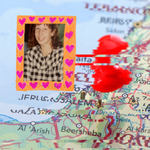
Hannah Senesh was born in Budapest on July 17, 1921, into a cultured, assimilated Hungarian Jewish family. Her father, Béla Senesh, was a celebrated playwright and journalist who died when Hannah was just six. She inherited his literary instinct, and by age 13, she was keeping the diary that would later be published in fifteen Hebrew editions and read by generations of students in the Israeli school system.
Hannah grew up secular, comfortable, socially at ease. Judaism and Zionism were not the organizing fact of her life. She attended a prestigious Protestant school for girls, excelled academically, wrote poetry in Hungarian, moved in Budapest's intellectual circles. She was, by every account, entirely at home in the country she was born in.
Then Hungary began to change around her. Antisemitic legislation crept through public life in the late 1930s. Jews were barred from professions, restricted in universities, and required to pay higher school fees. Hannah's own school charged Jewish students double the standard rate. The world she had assumed was hers was quietly, legally, being taken away.
Hannah began to think differently about what being Jewish meant, and what it required. She joined Maccabea, a Zionist youth movement, and started learning Hebrew. And in October 1938, at seventeen years old, she wrote in her diary:
“I've become a Zionist. This word stands for a tremendous number of things. To me it means, in short, that I now consciously and strongly feel I am a Jew, and am proud of it. My primary aim is to go to Palestine.”
— Hannah Senesh, diary entry, October 1938, age 17
Eight months later, she graduated at the top of her class. Her teachers tried to dissuade her from making aliyah. A student of her ability could go on to be highly educated and praised, they said. She had a future in Hungary, they said. She thanked them politely and boarded a boat alone.
Hannah Senesh arrived in Mandatory Palestine in September 1939, the same week World War II began, and took a bus to the agricultural school in Nahalal to start over from the ground up. She wrote to her mother almost immediately:
“I am home.”
Caesarea: Finding Home and Finding Her Voice
She completed 2 years of agricultural training, then joined Kibbutz Sdot Yam on the Mediterranean coast near ancient Caesarea, where she worked in the kitchen and the laundry and wrote poems in the language she had taught herself. Hebrew, not Hungarian, became her literary language. She fell completely in love with the sea.
“I'd love to describe the glory of the sea, but really it's just magnificent. The sea, and I live here beside it.”
— Hannah Senesh, diary entry, Kibbutz Sdot Yam
It was there, in 1942, that she wrote the poem the world would come to know as “Eli, Eli.” Not a war poem. Not a lament. A love poem to the land itself, to the sand and the sea and the light and the simple, pressing fact of being alive in a place that finally felt like home.
Eli, Eli: A Prayer for the Land
My God, my God, may it never end — the sand and the sea, the rustle of the water, the lightning of the sky, the prayer of man.
אֵלִי, אֵלִי שֶׁלֹּא יִגָּמֵר לְעוֹלָם הַחוֹל וְהַיָּם רִשְׁרוּשׁ שֶׁל הַמַּיִם בְּרַק הַשָּׁמַיִם תְּפִלַּת הָאָדָם
Hannah never heard the melody that made her words famous, composed by David Zahavi in 1945.
The Choice: Returning to the Fiery Furnace
By 1943, Hannah Senesh had done what millions of Jews desperately wanted and could not do: she had gotten out. She had a community, a kibbutz, a life in Palestine, built with her own hands. The war was happening elsewhere, to other people. She volunteered to go back to Europe, on a mission to save more Jews.
Jewish Agency officials approached her about a British-led parachute operation. 37 Jewish volunteers from Palestine would drop behind enemy lines in occupied Europe to support the Allies and help warn Jews facing deportation. Hannah Senesh signed up. She trained as a wireless radio operator, and parachuted into Yugoslavia in March 1944, where she linked up with local partisans.
In June 1944, she crossed the border into Hungary, walking knowingly into the country that was at that exact moment deporting its Jewish population to Auschwitz, at a pace that would kill 437,000 people in a matter of weeks. She was arrested at the border within hours.
Imprisoned, tortured, beaten, losing teeth, tied to a chair, not by Jihadis but by white Europeans. Her despicable captors brought her mother to the prison and threatened to harm her if Hannah would not reveal her mission. She said nothing. For months, the two of them were held in the same building, catching glimpses of each other through windows and across courtyards. Other prisoners would later describe Hannah's presence in that prison as a steadying force. She wrote a poem on the wall of her cell.
Silence and Defiance in Budapest
One, two, three, eight feet long, two strides across, the rest is dark. Life is a fleeting question mark. One, two, three, maybe another week, or the next month may still find me here, but death, I feel, is very near. I could have been 23 next July. I gambled on what mattered most, the dice were cast. I lost.
In November 1944, she was brought before a Hungarian tribunal on charges of treason. She argued her own case, telling the judges that with the Soviet front advancing and the war visibly ending, that their own fates would soon hang in the balance. The presiding officer took it as a personal affront.
On November 7, 1944, 23 year old Hannah Senesh was executed by firing squad in Budapest.
Israel's Declaration of Independence came 3.5 years after her death. Although Senesh never saw the flag raised, never stood on soil that was formally, legally, a Jewish homeland. she had already answered the question the declaration was built on, in a diary entry at age 17. She answered it again at 18, alone on a boat. Then again at 22, jumping out of a plane. And again while locked inside a prison cell in Nazi-occupied Budapest.
Her remains were brought to Israel in 1950 and reinterred in the military cemetery on Mount Herzl in Jerusalem, in the parachutists' section. Streets in Israel were named after her, and “Eli, Eli,” the poem she wrote by the sea at Caesarea, went on to become one of Israel's unofficial anthems.
October 7th: The Question We Face Today
Jews in the diaspora today are having a “Hanna Senesh moment” today, and this moment has not been a slow awakening, but started at an exact moment in time: October 7, 2023. Not unlike Europe before the war, the world made it impossible for Jews to feel part of a society that whitewashes and willingly supports violence against Jews.
That is Hannah Senesh's story. Many are familiar with her courageous act of parachuting behind enemy lines, and unwavering in Nazi torture chambers. But what led her to those brave actions? The moment a young woman who had never given her Jewish identity much thought watched her world change around her and felt, for the first time, that her identity was unquestionably zionist.
Not everyone will respond the way she did. But the question she answered at seventeen is the same question Jews across the diaspora are facing, many of them for the first time: what does this mean for me, and what am I willing to do about it?
The answer does not have to be a parachute, or making aliyah, though for some, it will be, and is already. Every Jew answers this question in their own way. A match, struck. A flame, passed on.
Hannah Senesh wrote those words and then she jumped. Blessed is the match, not despite the burning, because of it. Senesh was an exceptional human who boarded a ship, alone, that sailed from the luxurious, intellectual heart of Europe to a dust-ridden but stunning shared community situation in a kibbutz of British Mandated Palestine, toward a land, toward a people, toward a question she had decided was worth answering with her life.
This Yom Ha'atzmaut, the day Israel marks 78 years of improbable, hard-won existence, it is worth asking what your match is for. What are you willing to kindle?
Hannah Senesh was 17 when she wrote her first Zionist diary entry, 18 when she made Aliyah alone, and 23 when she died. She had been alive for less time than most people spend deciding their next move in life.
This Chag Ha'atzmaut, may the flame she lit keep burning in us.
Hannah Senesh (July 17, 1921 – November 7, 1944) is buried on Mount Herzl, Jerusalem. She is a national heroine of the State of Israel. "Eli, Eli" was set to music by David Zahavi in 1945. "Blessed Is the Match" is read at memorials worldwide. Her diary has been published in fifteen Hebrew editions.